

In American workplaces, how you talk about deadlines at work can affect how professional, reliable, and confident you sound.
If you’re a non-native English speaker, knowing the right phrases to talk about deadlines at work is just as important as completing the task itself.
So today, I’m giving you a complete guide.
Not just phrases — but real context, real strategy, and real examples you can use immediately.
Let’s get into it.
In U.S. business culture, deadlines are often tied to three things:
Trust
Reliability
Professionalism
If you miss a deadline without warning, it doesn’t just look like a time issue — it can look like poor planning or lack of communication.
But here’s the good news:
Americans don’t expect perfection.
They expect communication.
If you communicate clearly and early, you’ll usually be fine.
So the key is not just finishing on time.
The key is knowing how to talk about deadlines at work professionally and clearly.

Let’s start with something simple.
You’re assigned a task.
But no deadline is mentioned.
Many non-native speakers say something like:
❌ “When do you want this?”
❌ “Deadline?”
It’s not wrong — but it sounds abrupt.
If you want to talk about deadlines at work in a more professional way, try this instead:
✔ “When would you like this completed?”
✔ “What timeline are you working with?”
✔ “Is there a specific deadline for this?”
✔ “When should I plan to have this ready?”
✔ “What’s the target date?”
Notice the tone — it’s calm and collaborative.
Manager: “Can you prepare a summary of this report?”
You: “Absolutely. When would you like it completed?”
Simple. Polished. Professional.
This is one of the most important skills when you talk about deadlines at work.
In American workplaces, people often discuss dates quickly.
If you don’t confirm clearly, misunderstandings happen.
Instead of:
❌ “Okay.”
Say:
✔ “So just to confirm, you need this by Thursday at 3 PM?”
✔ “I’ll have this ready by end of day Friday.”
✔ “I’ll plan to send this over by Tuesday morning.”
That phrase — “just to confirm” — is extremely useful in Business English.
It shows responsibility and clarity when you talk about deadlines at work.
Hi Sarah,
Just to confirm, I’ll send the final draft by Wednesday at noon.
Let me know if anything changes.
Best,
Alex
Clear. Calm. No confusion.
This is where many learners panic.
You realize you won’t finish on time.
Do NOT say:
❌ “I can’t finish.”
❌ “It’s impossible.”
❌ “Too much work.”
That sounds negative or emotional.
When you talk about deadlines at work, especially extensions, you need solution-focused language.
✔ “I may need a bit more time to complete this thoroughly.”
✔ “Would it be possible to extend the deadline to Friday?”
✔ “Given the scope, I want to make sure the quality is strong.”
✔ “I’m currently balancing a few priorities — could we adjust the timeline slightly?”
Notice something important:
You explain.
You propose a solution.
You stay calm.
Instead of:
❌ “I can’t finish by tomorrow.”
Say:
✔ “I’ve made solid progress, but to deliver a strong final version, I would need until Thursday. Would that work?”
See the difference?
You’re responsible — not apologetic and weak.

This one is serious.
If you already know you’ll be late, you must communicate EARLY.
When you talk about deadlines at work, timing of communication matters just as much as the deadline itself.
Never wait until the last minute.
Acknowledge the deadline
State the issue briefly
Offer a new timeline
Take responsibility
✔ “I wanted to give you a quick update. I won’t be able to meet the 2 PM deadline today due to the additional revisions requested. I can have the updated version to you by 10 AM tomorrow. My apologies for the delay.”
Professional. Calm. Responsible.
No drama. No excuses.
This is tricky because you don’t want to sound aggressive.
When you talk about deadlines at work with colleagues, tone is everything.
Never say:
❌ “You’re late.”
❌ “Where is it?”
❌ “You didn’t send it.”
Instead, soften it.
✔ “Just a quick reminder that the deadline is tomorrow.”
✔ “I wanted to check in on the status of the report.”
✔ “Are we still on track for Friday?”
✔ “Let me know if you need anything from me to move this forward.”
That last one is powerful. It sounds supportive, not demanding.
Hi James,
Just checking in — are we still on track for the Monday deadline?
Let me know if you need anything from me.
Thanks!
Friendly. Professional. Non-threatening.

When you talk about deadlines at work in meetings, Americans often use indirect, collaborative language.
Instead of:
❌ “We need this fast.”
You’ll hear:
✔ “What timeline makes sense here?”
✔ “Is this realistic for next week?”
✔ “Do we need to revisit the deadline?”
✔ “Are there any blockers that might affect the timeline?”
That word — blockers — is common in tech and corporate settings.
Manager: “Can we deliver this by next Friday?”
You: “Given the current workload, Friday might be tight. Tuesday would allow us to deliver a stronger result.”
Notice the phrase:
“Friday might be tight.”
Very American. Very natural.
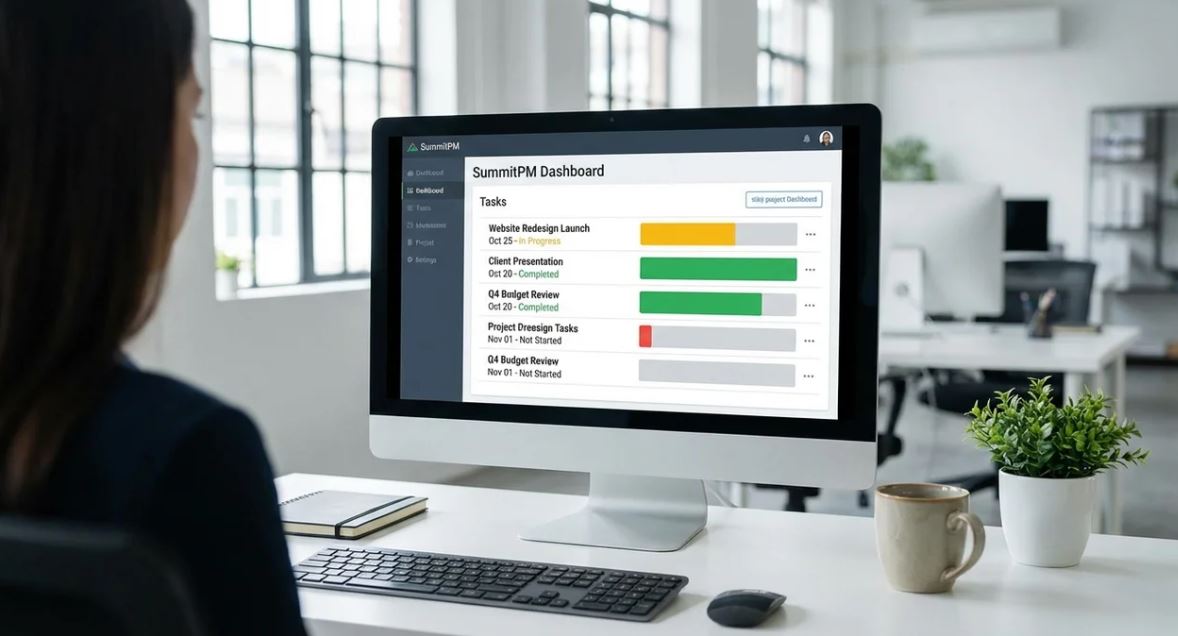
If you want to confidently talk about deadlines at work, you need to understand these common expressions:
By end of day (EOD)
Close of business (COB)
ASAP (as soon as possible)
Hard deadline
Soft deadline
Turnaround time
On track
Behind schedule
A hard deadline cannot move.
A soft deadline is flexible.
Example:
“Is this a hard deadline, or do we have some flexibility?”
Very useful question when you talk about deadlines at work.
Some cultures speak very directly about time.
American Business English tends to soften things slightly.
Instead of:
❌ “This is impossible.”
You’ll hear:
✔ “That timeline might be challenging.”
Instead of:
❌ “You’re late.”
You’ll hear:
✔ “We’re slightly behind schedule.”
This softening keeps workplace relationships smooth — especially when you talk about deadlines at work with managers or clients.
Let’s practice a few lines together. Repeat after me:
“When would you like this completed?”
“Just to confirm, the deadline is Friday at noon.”
“Would it be possible to extend the timeline?”
“I won’t be able to meet that deadline, but I can deliver by Monday.”
“Are we still on track?”
Say them out loud. Slowly. Then naturally.
That’s how you train professional rhythm in English.
At ChatterFox, we help non-native professionals with:
Business English that sounds natural
Real workplace listening & speaking
Pronunciation that improves clarity
Confidence in meetings and calls
We combine AI speech feedback with certified accent reduction coaches, so you don’t just learn rules—you practice real communication.
Deadlines are not just about time.
They’re about communication.
When you can confidently:
Ask about timelines
Confirm dates clearly
Request more time professionally
Deliver updates calmly
You sound reliable.
And in American workplaces, reliability builds trust fast.
Keep practicing these phrases.
Use them in emails.
Use them in meetings.
And next time you need to talk about deadlines at work, you won’t freeze —
you’ll respond like a professional.✨